
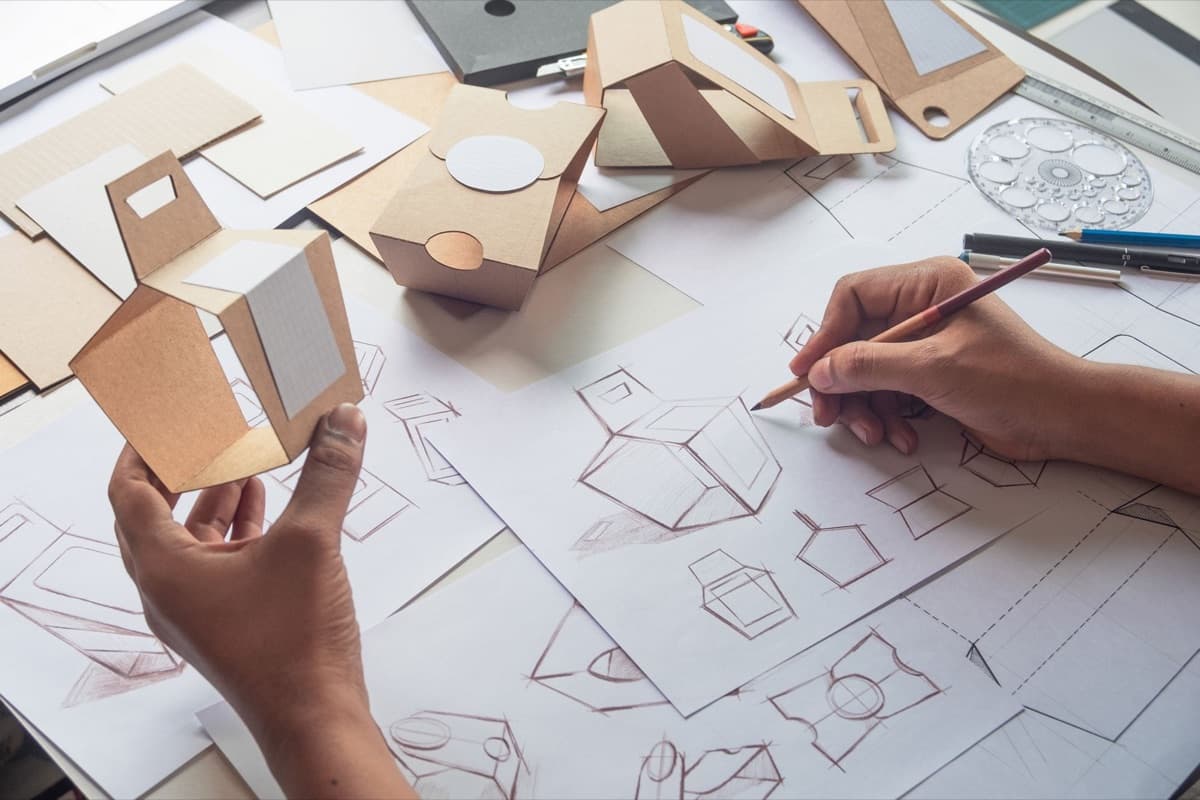
What Is a Design Patent? Understanding Its Importance and Benefits
The visual appearance of a product is crucial as it not only distinguishes it from competitors but also enhances its market appeal and strengthens brand identity. When a…
[SERVICE]Design patents
If the USPTO doesn’t approve your design patent, you don’t pay. One flat fee covers the drawings, the application and every office action, for products, packaging and app interfaces.
Backed byThe RLG Guarantee*Your attorneys
 Andrew RapackeManaging Partner · Registered Patent AttorneyElectrical and computer engineering. Former Naval Engineering Officer.
[01]Who it's for
When customers pick a product by how it looks, copies follow. A design patent is how the shape, the surface and the screens stay yours.
The shape of a product, a bottle, a case or the packaging it ships in.
Screens, icons and animated interfaces, shown on a display. The method behind them can be a utility patent.
Handles, housings and instruments with a form surgeons and buyers recognize.
Enclosures, controllers, wearables and mechanical parts with a distinctive shape.
[02]What it protects
A design patent covers a new, original and ornamental design for an article of manufacture. It protects the appearance a customer sees, the shape, the surface or both, for 15 years from the date it is granted.
The design also has to be new and not obvious over earlier designs.
[03]Screens and icons
Yes. The USPTO grants design patents for computer icons and graphical user interfaces, as long as they are claimed as shown on a display screen or a portion of one. The image alone is not enough.
The title and claim name a display screen, or a portion of one, with a graphical user interface or icon, and the drawings show the interface on the screen. The screen is usually drawn in broken lines, so the claim covers the interface and not the device.
An icon or interface that changes as you watch it can be claimed in two or more views, read in sequence. Only the images shown are claimed. The transition from one image to the next is not part of the design.
A picture that is only displayed on a screen, such as a wallpaper or a photo, is not an icon or a GUI. The USPTO treats it like a picture on paper, and it cannot be design patented.
More in protecting your UI with design patents. The method behind a feature can be protected separately with software patents.
[04]Drawings
A design patent has one claim, and that claim points to the drawings. What the drawings show in solid lines is what you own. What they leave out, or show in broken lines, you do not.
Every design application has a single claim, written as the ornamental design for the named article, as shown. Designs that are unrelated or clearly different need separate applications. Close variations of one design concept can share one application.
New matter cannot be added after filing, and adding shading later to explain a shape can count as new matter. An unclear or incomplete drawing set can leave the application impossible to fix. That is why we prepare formal drawings from every view the USPTO needs before anything is filed.
For a step-by-step walk-through, see how to patent a design, and for the basics, what a design patent is.
[05]How we work
A design patent is only useful if it covers what a copier would make. We start with your product and where it sits in your business, which features customers recognize, which versions you sell or plan to, and what competitors already sell. Then we draw and claim the design to cover blatant knock-offs and closer imitations.
You review the drawings and the application, ask for changes and approve them before anything is filed.
File before you launch, if you can. In the US, your own public disclosure does not count against you if you file within one year of it, but the clock starts at the first launch, sale, listing or post. There is no provisional option for designs, so the design application itself is your first filing.
Design applications are not published while they are pending. The design stays confidential until the patent is granted, and you can mark the product patent pending in the meantime.
No finished product is needed. Renderings or sketches can be enough to prepare formal drawings. For one product line's example, see protecting your shoe designs with patents.
[06]Your options
A design patent protects how a product looks. A utility patent protects how it works. Many products qualify for both.
| Design patent | Utility patent | |
|---|---|---|
| What it protects | How a product looks | How a product works, is made or is used |
| Claims | One, pointing to the drawings | Several written claims |
| How long it lasts | 15 years from grant | 20 years from filing the full application |
| Maintenance fees | None | Due 3.5, 7.5 and 11.5 years after grant |
| Provisional option | No | Yes |
| Published before grant | No | Usually 18 months after the earliest filing date |
| Window to file abroad | 6 months from your first filing | 12 months from your first filing |
| Our flat fee | $3,200, office actions included | $7,000 to $12,000, drawings and USPTO filing fees included |
| Covered by The RLG Guarantee | Yes | No |
Filing both makes a product harder to copy. A competitor would have to change how it works and how it looks.
More in design patent vs utility patent and on our utility patents page.
[07]Other protection
All three can protect part of how a product presents itself. A design patent protects a new look from the day it is granted. Trademarks and trade dress protect what customers already connect to your brand.
| Design patent | Trademark | Trade dress | |
|---|---|---|---|
| What it protects | The ornamental look of a product | A name, logo or slogan that tells customers who makes it | A product's shape or packaging, once customers see it as your brand |
| What you have to show | The design is new, original, ornamental and not obvious | The mark is distinctive and not merely descriptive | The look is not functional, and for a product's shape, that customers already link it to you |
| When protection starts | When the patent is granted | With use in commerce, stronger once registered | Only after customers connect the look to you, which takes time |
| How long it lasts | 15 years from grant | As long as it is used, with registrations renewed every 10 years | As long as it is used and stays distinctive |
The usual sequence is a design patent at launch, while the look is new, and trade dress over time as customers come to know it. The trademark protects the name on the product throughout.
See trademark registration and copyright vs patent vs trademark.
[08]The flat-fee path
If the USPTO denies your design application, you get a full refund. The flat fee covers the drawings, the application and every response to the examiner.
01One flat fee
$3,200
Drawings and office actions included
File any time, ideally before you launch
USPTO denies it, full refund**Refunds subject to the RLG Guarantee Policy in your engagement letter. Utility patents, which protect how a product works, are quoted flat and are not covered by the guarantee. How The RLG Guarantee works
[09]The process
What happens at each step and who does the work. Timing shown is typical, never a promised date.
Design patentCall to grant
[10]Cost
With us, $3,200 flat for the drawings, the application and every office action response. USPTO fees depend on your entity size, and there are no maintenance fees after grant.
| Stage | When | What it costs |
|---|---|---|
| Design patent flat fee | Before filing | $3,200, drawings and office action responses included |
| USPTO filing, search and examination fees | When filed | $1,300, or $520 for a small entity and $260 for a micro entity |
| USPTO issue fee | When the patent is allowed | $1,300, or $520 for a small entity and $260 for a micro entity |
| Maintenance fees | After grant | None |
USPTO fees are from the USPTO fee schedule effective January 19, 2025, and the USPTO adjusts them from time to time. Your flat-fee quote states which of them it includes. Small entity status generally applies to companies with fewer than 500 employees, and micro entity status has income and filing limits.
For costs across patent types, see how much a patent costs.
[11]Abroad
A US design patent covers the US only. To keep your US filing date abroad, you have 6 months from your first design filing, half the time a utility patent gets.
One international design application under the Hague Agreement can cover up to 100 designs and designate any of the Hague System's members, which include every country in the European Union. The US is a member, so the application can be filed through the USPTO.
Grace periods for designs vary by country, and some have none. If foreign markets matter, file before the design is shown, sold or posted anywhere.
For a design made in the US, the USPTO must grant a foreign filing license before you apply in another country. Filing the US application first serves as the request, and the filing receipt states whether the license is granted.
[12]Questions
Still deciding? Your first call is free and comes with a straight answer on whether to file.
Book A Free Strategy CallWith us, $3,200 flat, including the formal drawings and every office action response. The USPTO's own fees depend on entity size. Filing, search and examination total $1,300, or $520 for a small entity and $260 for a micro entity, and the issue fee is the same again when the patent is allowed. Your quote states which of them it includes. There are no maintenance fees.
Fifteen years from the date it is granted. Unlike a utility patent, there are no maintenance fees to keep it in force.
The ornamental appearance of a product, meaning its shape, its surface ornamentation or both, as shown in the drawings. It does not protect how the product works. That is what a utility patent covers.
Yes. Icons and graphical user interfaces can be design patented when claimed as shown on a display screen or a portion of one. Images that change in sequence can be claimed too. A picture that is only displayed, such as a wallpaper, does not qualify.
No. Provisional applications are only for utility and plant inventions. The design application is your first filing, and it is not published while it is pending, so the design stays confidential until grant.
If the product is new in both how it works and how it looks, often yes. They protect different things, and a competitor would have to avoid both. Your strategy call settles whether either one, or both, is worth filing.
In the US, yes, within one year of your first public disclosure, such as a launch, sale, listing or post. After a year, your own disclosure can bar the patent. Many other countries give less time or none, so file before launch if you plan to sell abroad.
USPTO rules allow a single claim, to the ornamental design for the named article as shown in the drawings. That makes the drawings the claim. Unrelated or clearly different designs each need their own application.
A design patent protects a new look from the day it is granted, for 15 years. Trade dress protects a product's look only after customers associate it with your brand, and lasts as long as that stays true. Many companies use the design patent first and build trade dress over time.
No. Photos, CAD files, renderings or detailed sketches can be enough for us to prepare formal drawings. What matters is that the drawings show the full appearance from every view.
If the USPTO denies your design application, you get a full refund. Every office action response is included in the flat fee, so answering the examiner adds no attorney fee. Refunds are subject to the RLG Guarantee Policy in your engagement letter.
[13]Learning Center
The visual appearance of a product is crucial as it not only distinguishes it from competitors but also enhances its market appeal and strengthens brand identity. When a…
One of the most common questions we encounter during our initial consultation is what type of patent application do I need? What are the differences between a design…
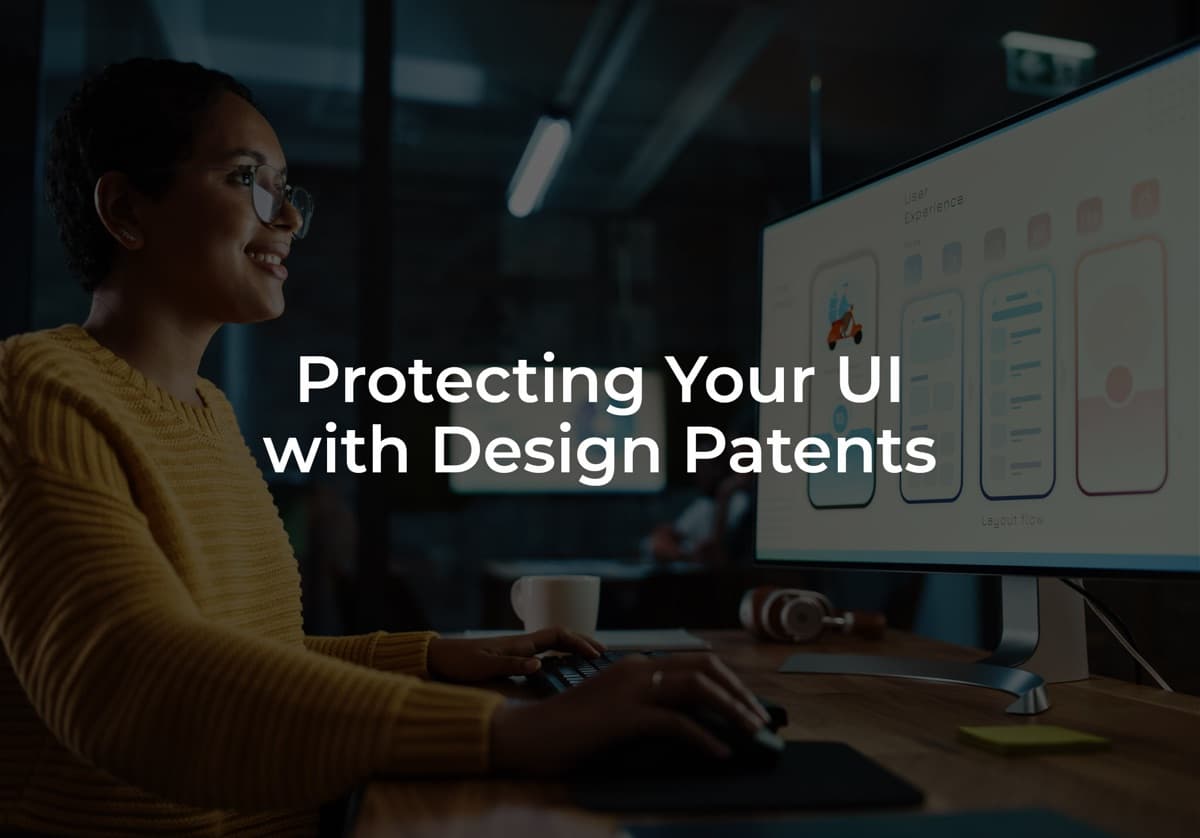
In the tech world, the design of the user interface (UI) is critical. You can have a great idea and an excellent business model, but if your product doesn’t have a good…
[14]Client reviews
4.7 across 614 public reviews on Google, Trustpilot and Avvo.
#1Top reviewed IP law firm*
Read client reviews“I wanted to patent one of my jewelry designs and it was a very smooth process for me as all the details were taken care by the firm.”
“Could not be happier with the customer service and straightforward fixed-fee approach.”
“Completed the patent search and utility patent within weeks.”
Reviews reflect individual client experiences. Quotes are excerpts. Prior results do not guarantee a similar outcome. *#1 top reviewed means the most public client reviews on Google, Trustpilot and Avvo of any US patent or trademark firm.
Talk through your design with a registered patent attorney. The call is free, with no obligation.