

Key Takeaways
- A cease and desist letter is a formal notice, not a court order. It cannot compel you to do anything on its own, but ignoring a valid one can support a finding of willful infringement.
- Intellectual property infringement is often the reason startups and inventors receive cease letters, covering trademark, patent, and copyright claims.
- Verify the sender's claims before responding. Search the USPTO database to confirm a trademark or patent is real and active.
- Willful copyright infringement raises statutory damages from $30,000 to $150,000 per work, so a documented warning changes the financial stakes.
- For any dispute involving a registered trademark, patent, or ongoing financial harm, an attorney-drafted letter is the stronger investment.
*Written by Andrew Rapacke, Managing Partner, Registered Patent Attorney.* Andrew Rapacke is a registered patent attorney and the Managing Partner of The Rapacke Law Group, a full-service intellectual property law firm. He helps individuals and corporations across industries with the protection, prosecution, licensing, and enforcement of their intellectual property, with deep experience in patent, trademark, and copyright matters spanning software, AI and machine learning, blockchain, medical devices, and autonomous vehicle technology. A graduate of the United States Naval Academy, Andrew served as a Naval Engineering Officer before pursuing law and remains active in the startup and inventor communities throughout Florida.
A founder opens an envelope from a law firm. Inside is a cease and desist letter claiming their product name infringes a registered trademark, with 14 days to respond. Most founders freeze. That reaction is understandable, but it is also where costly mistakes begin. Such a letter is not a lawsuit and not a court order, yet how you handle it can decide whether a dispute ends in days or drags into years of legal proceedings. This article walks startups and inventors through the anatomy of a cease and desist letter, the legal weight it actually carries, the common grounds for sending one, how to respond, and what happens if the other party takes no action.
What a Cease and Desist Letter Actually Is (And What It Isn't)
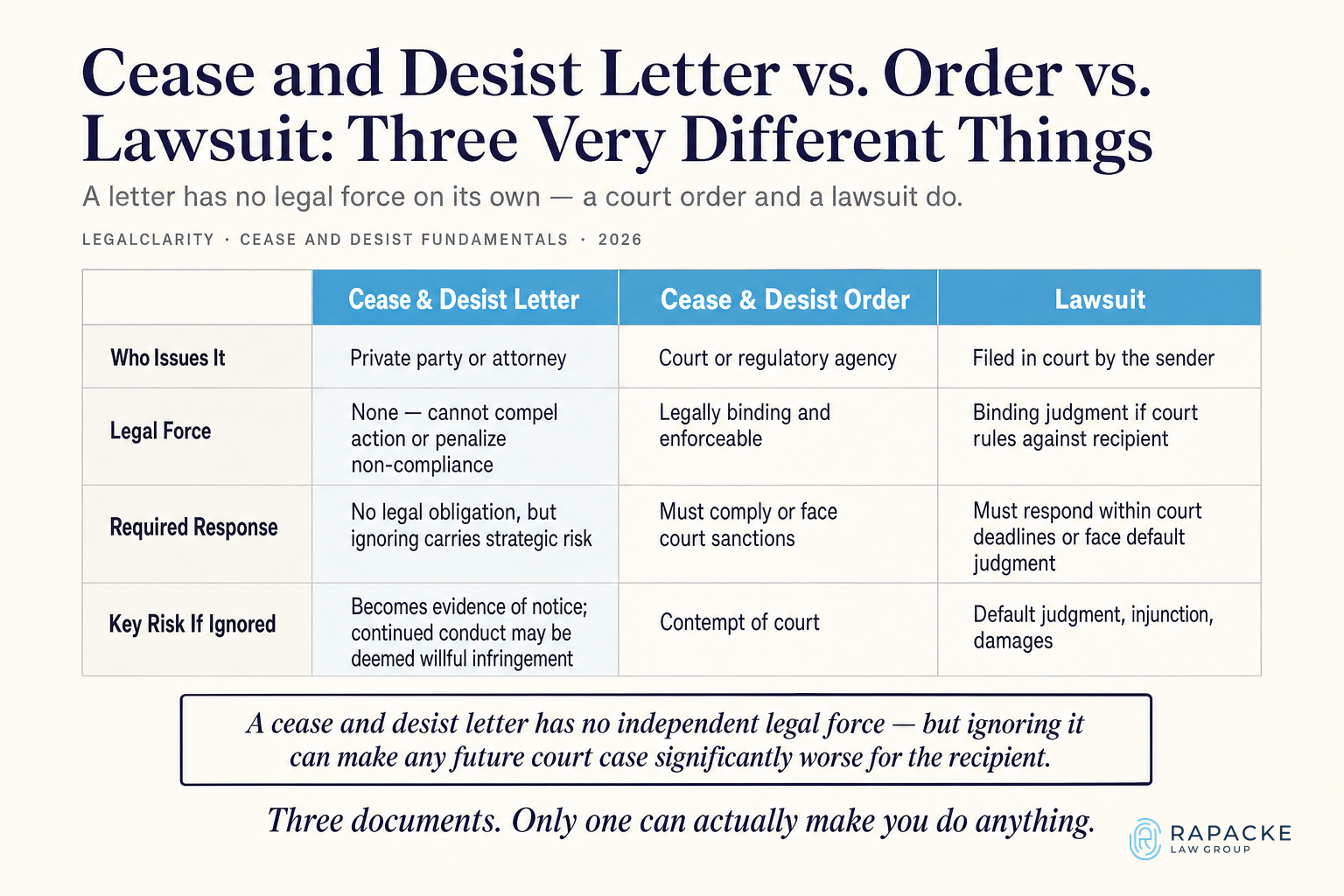 Cease and Desist Letter vs. Order vs. Lawsuit: Three Very Different Things — Source: LegalClarity, 2026
The legal definition in plain English
A cease desist letter is a formal notice from one party demanding another party stop a specific behavior and warning of potential legal action if the conduct continues. It is not a lawsuit and not a government action. Legal guides agree that the letter itself has no independent legal force, unlike a court-issued cease desist order that can actually compel action. The difference matters. This type of demand comes from a private party or their attorney, while a cease order comes from a court or an agency such as the Federal Trade Commission. Courts treat the letter as evidence that the recipient was put on notice, which becomes important later. Knowing it is not legally binding should remove the panic, not the urgency. For a deeper breakdown of when these letters are appropriate, see our ultimate guide on the grounds for sending one.
Who can send one and why that matters
Anyone can send a cease and desist letter without an attorney. A letter on law firm letterhead, though, signals the sender has counsel and is prepared to follow through, while an aggressive DIY letter can backfire and create legal risk for the sender. The sender legal position is simply stronger when a qualified legal professional prepares it. If you are weighing whether to draft one yourself or need a desist letter template to get started, our overview on how to assert your rights with these demand letters explains what is at stake.
The Six Most Common Grounds for Sending a Cease and Desist Letter
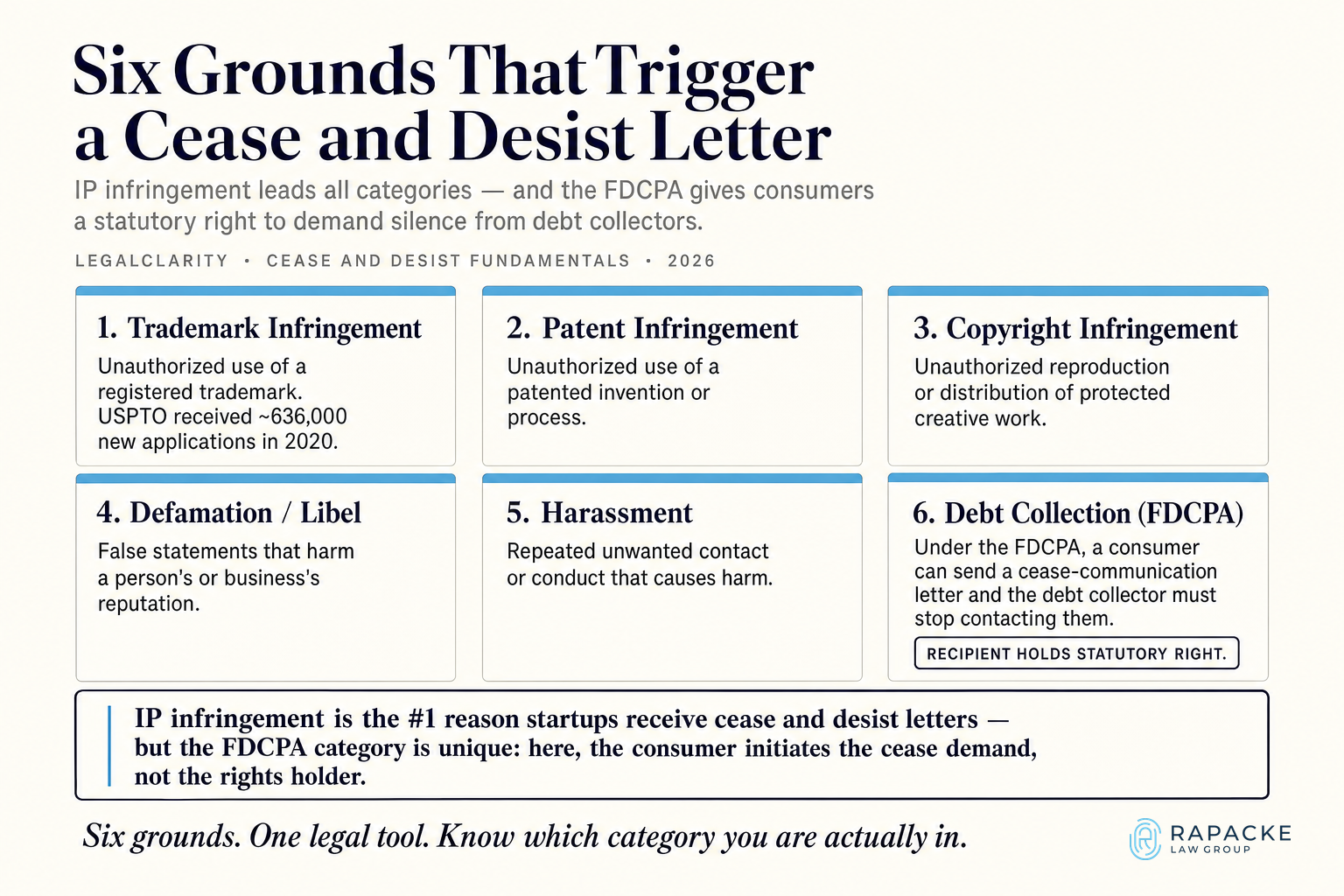
Intellectual property infringement
The three primary IP grounds are trademark infringement affecting trademark rights, often referencing a specific trademark registration number, patent infringement, and copyright infringement. The sheer volume of brand activity explains why trademark disputes are so common. The USPTO received nearly 738,000 trademark application classes in FY 2020 and a record 943,000 in FY 2021, with filings remaining elevated at about 765,000 applications in FY 2024, according to a USPTO year in review analysis. If your product, name, or content resembles an existing registered IP asset, you are a likely recipient. For a deeper look at how to enforce these rights, see our overview of the legal remedies for trademark infringement.
Defamation, harassment, and debt collection
Beyond intellectual property rights, these desist letters also address defamation and libel, meaning false statements that harm reputation, harassment, and debt collection. Under the Fair Debt Collection Practices Act, a consumer who sends a cease-communication letter forces the collector to stop contacting them, with very limited exceptions, Cornell LII notes. This is one area where the fair debt collection practices act provides consumers with a direct mechanism to halt unwanted contact. Identify which legal category your situation falls into first, because the timelines and legal consequences of the legal process differ. Many of these disputes fall under broader litigation strategy, where the response path depends heavily on the underlying claim.
What Every Cease and Desist Letter Must Include to Have Any Force
The required elements that establish legal credibility
A demand letter with real weight includes five elements: identification of both parties, a specific description of the alleged conduct, the legal basis for the demand such as a statute or trademark registration, a clear compliance deadline, and a statement of potential legal consequences if ignored. Neutral practice guides such as Dennemeyer list substantially the same components. Some states add further requirements. Under Missouri Revised Statutes 416.652, a court weighing whether a patent infringement demand was made in bad faith may consider factors such as the demand omitting the patent number, failing to identify the patent owner, or failing to identify the specific accused product. If the letter you receive is missing key elements, that is a negotiating point, not a reason to ignore it.
What to avoid when drafting your own letter
Avoid inflammatory language, vague accusations, and threats that exceed your actual legal rights, because overstating your legal authority can expose you to claims of abuse of process and invite further legal action against you. Send the letter by certified mail with return receipt so you have proof the other party received formal notice. Precision and tone protect the sender as much as they pressure the recipient. If the dispute crosses borders, the analysis shifts, and our guide on how to deal with overseas infringement issues covers the added complexity.
How to Respond When You Receive a Cease and Desist Letter
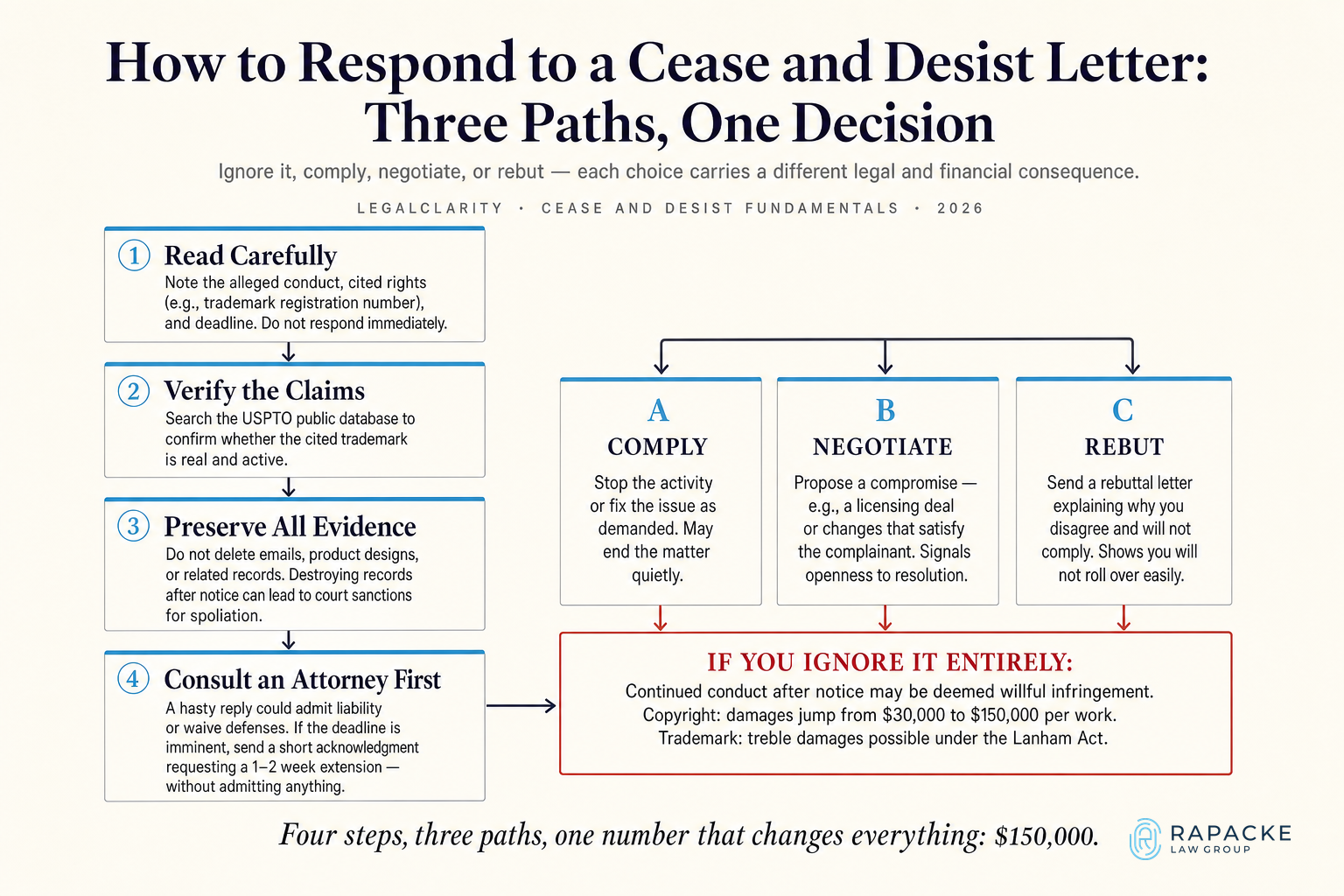 How to Respond to a Cease and Desist Letter: Three Paths, One Decision — Source: LegalClarity, 2026
Your first 48 hours after receiving a cease letter
Do not respond immediately and do not ignore it. The first step is verifying the claims. Does the sender hold a valid registered trademark or patent? Is the alleged unauthorized use actually happening? You can search the USPTO public database to confirm a trademark or patent is real and active, and consulting legal advice at this stage helps you interpret what you find. Equally important, preserve all related evidence. Once you are on notice of a dispute, destroying records can lead to serious sanctions for spoliation. Verify before you respond, because an uninformed reply can waive defenses or create admissions.
Response options and what each signals
A recipient has realistic paths when receiving a cease desist letter: comply fully, negotiate a license or settlement, send a rebuttal letter disputing the claims, or ignore the letter and wait for legal action. Each signals something different to the other party. For startups, a licensing conversation is often more valuable than a fight, and many IP disputes settle at this early stage before reaching court proceedings. A negotiated outcome may end in an IP licensing agreement or assignment that turns a threat into a business relationship. Consult legal counsel before choosing, especially when intellectual property rights or monetary damages are involved.
What Happens If a Cease and Desist Letter Is Ignored
The realistic escalation path
Ignoring cease letters does not make the dispute disappear. For intellectual property infringement claims, the sender's next moves typically include filing a federal lawsuit, seeking an injunction, or initiating a proceeding before the USPTO's Trademark Trial and Appeal Board or Patent Trial and Appeal Board, as well as notifying any relevant third party of the dispute. Silence often strengthens their case. Continuing infringing behavior after receiving formal notice is generally treated as willful infringement, which carries worse consequences than unknowing infringement. The financial swing is dramatic. In copyright cases, maximum statutory damages can reach up to $150,000 per work where infringement is proven willful, and in trademark cases courts may award enhanced remedies including treble damages in appropriate circumstances. Ignoring the letter may convert a negotiable dispute into formal proceedings where costs climb fast, and high-stakes patent disputes routinely run into the millions, as the $100M patent infringement suit against a Kim Kardashian phone case company shows.
When ignoring might be a calculated decision
Sometimes such a letter arrives from a party with no legitimate claim, an expired trademark, or an unenforceable patent, or may even relate to alleged illegal activity that does not hold up legally. If a freedom-to-operate analysis confirms no valid legal basis, a business may continue operating while documenting that conclusion. That is a deliberate legal strategy, not a casual choice. "Ignore" only becomes defensible after counsel reviews the letter and the underlying IP.
When to Send a Cease and Desist Letter to Protect Your IP
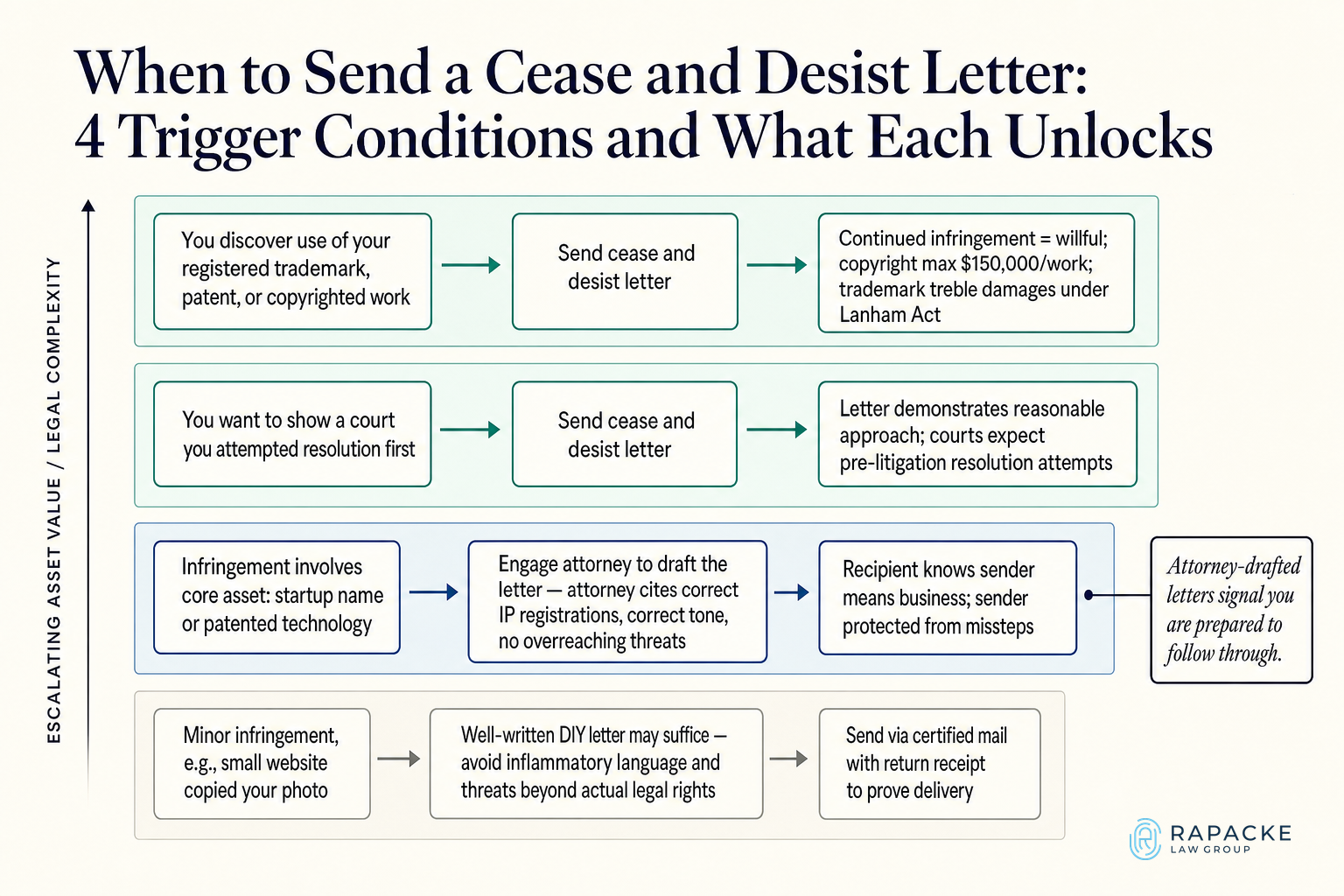 When to Send a Cease and Desist Letter: 4 Trigger Conditions and What Each Unlocks — Source: LegalClarity, 2026
When a cease letter is the right first move
For IP owners, a cease desist letter often serves as the formal notice that establishes willful infringement, which unlocks enhanced damages later. A patent owner who never notified the infringer can have a harder time securing treble damages, while a clear letter that the other party ignores makes any continued infringement knowingly willful. Many judges also expect parties to attempt resolution before rushing to litigation, so sending cease letters shows you tried the reasonable approach first. Sending this notice first is frequently required to maximize your legal remedies down the road. When the infringement involves creative work, a documented warning is also a key step before any copyright litigation becomes necessary.
DIY letter versus attorney-drafted letter
A DIY cease and desist letter is permissible but risky. It may cite the wrong legal basis, use inflammatory language, misapply copyright law, or fail to put the other party on proper formal notice. An attorney-drafted letter signals serious intent, includes accurate statutory references, and positions you for further action. For any dispute involving a patent, registered trademark, or ongoing financial harm, attorney involvement at this stage is the better investment. Growing companies that need ongoing support without a full-time legal hire often turn to a service like Counsel On Demand to handle these matters as they arise.
Frequently Asked Questions About Cease and Desist Letters
What exactly does a cease and desist mean?
Cease and desist means stop what you are doing and do not start it again. It is a formal way of telling someone their behavior violates the law or someone's rights and must halt immediately, per Cornell LII. In practice it usually refers to a letter putting the recipient on notice that potential legal action may follow.
What does a cease and desist do?
This type of letter does not force compliance the way a court order would. It formally warns you and creates a written record that you were notified of the alleged wrongdoing. If you continue, that record can later be used as evidence that you knowingly infringed, which raises the legal and financial stakes.
How powerful is a cease and desist letter?
Its power depends on the claim behind it. One backed by a registered trademark, valid patent, or active copyright registration carries real force because it previews genuine litigation risk. A letter making deficient or baseless claims has little effect and can be challenged. The sender's legal representation also shapes how seriously the recipient responds.
What does it mean when someone tells you to cease and desist?
It means they believe you are engaging in conduct that violates their legal rights and they are formally demanding you stop. This is typically the first step before legal action and carries consequences if ignored. Receiving one does not make you automatically liable, but it requires a timely, informed response, and using a free cease letter template without understanding your legal position can cause more harm than good.
Protect Your IP Before You Need to Send or Respond to a Cease Letter
A cease and desist letter is a fork in the road for startups and inventors. How you respond, or whether you send one, can decide whether an IP dispute resolves in days or stretches into years of legal proceedings. Founders who understand their intellectual property rights before a dispute arises are in a far stronger position than those scrambling after a cease order or formal notice lands. The Rapacke Law Group works with tech startups and inventors to build defensible IP portfolios and to respond strategically when these letters arrive. Book a Free IP Strategy Call to assess your current IP exposure or review a letter you have received, and protect what you have built before the next envelope shows up.
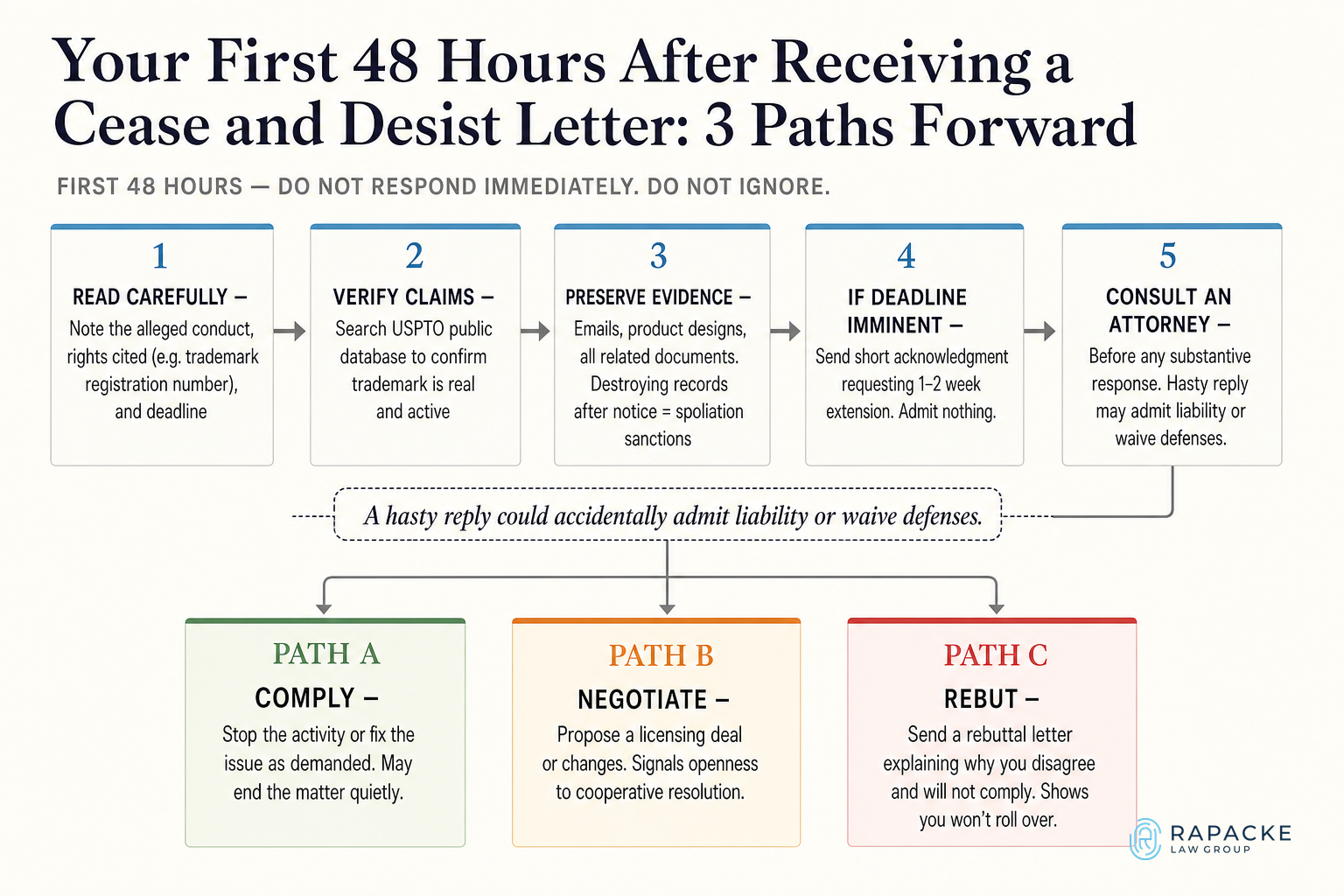 Your First 48 Hours After Receiving a Cease and Desist Letter: 3 Paths Forward — Source: LegalClarity, 2026
To Your Success,
Andrew Rapacke Managing Partner, Registered Patent Attorney Rapacke Law Group