Choosing An AI Patent Attorney: Everything You Need To Know
As an AI Patent Attorney, it’s clear that artificial intelligence (AI) is permeating almost every sector, from ChatGPT to smart indoor farming to speech recognition…
[SERVICE]AI patents
We patent the technical improvement inside your AI, in how the model is built, trained, fed or run, and claim it so the patent survives the eligibility test and reads on a competitor's system. Registered patent attorneys with software and AI backgrounds, and one flat fee for each step, quoted before any work begins.
Your attorneys
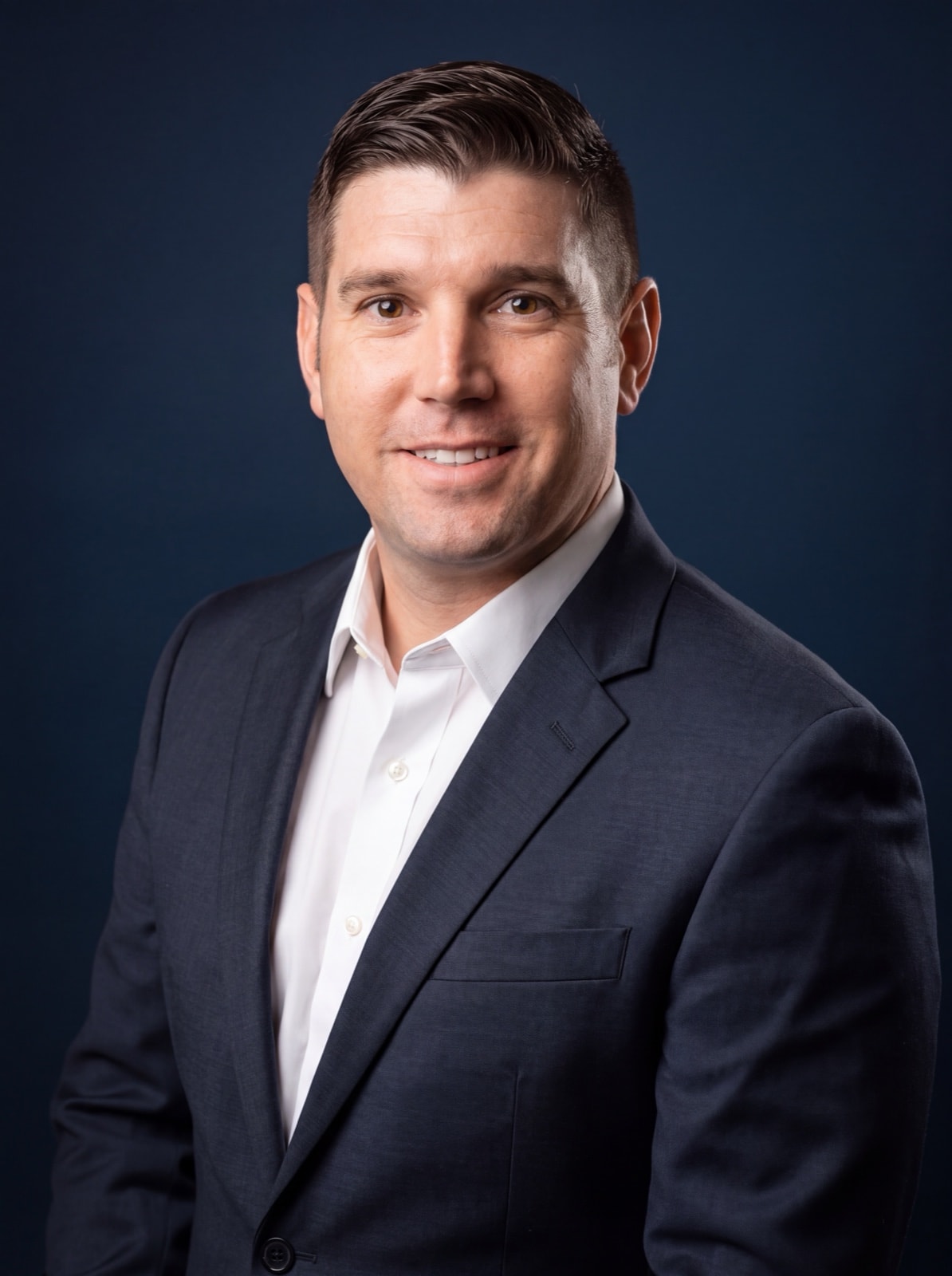 Andrew RapackeManaging Partner · Registered Patent AttorneyElectrical and computer engineering. Former Naval Engineering Officer.
 Chris WattRegistered Patent Attorney · Former USPTO ExaminerSoftware, AI and machine learning, and MedTech. A full-stack software engineer.
 Ken BrooksRegistered Patent AttorneySoftware, AI and machine learning, electrical and mechanical systems.
[01]Who it's for
A competitor can call the same foundation model you do. What sets you apart is how you train it, feed it, run it or put it to work, and that is what a patent can protect.
Teams whose product is the model, the agent or the pipeline around it, filing before the first launch, paper or investor demo.
AI features built into a product you already sell, where the way the model is wired into the system is the invention.
Accelerators, on-device inference and ways to run models with less memory, power or bandwidth.
Models that read scans, signals, transactions or sensor data in health care, finance and vehicles.
[02]What's patentable
An AI patent covers a technical method or system. A formula, a model described only as math, or a business result reached with AI is an abstract idea on its own.
The method also has to be new and non-obvious. The $999 search tells you where you stand before you spend on filing.
[03]The work
An AI patent attorney finds what is technically new in your AI system, decides what to patent and what to keep secret, writes claims that can pass the eligibility test, and answers the USPTO until the patent is granted.
Apart from inventors filing for themselves, only attorneys and agents registered with the USPTO can prosecute patent applications for others. Every application here is drafted by a registered patent attorney.
Comparing firms? Read choosing an AI patent attorney and what to look for in an artificial intelligence law firm.
[04]Where it lives
Look past the prediction. The part of an AI product worth patenting is usually what your team had to change to make the model work in the real world.
A useful test is to ask what your engineers argued about. The problem that took three attempts to solve is often the invention.
More on whether an AI wrapper is patentable, whether AI agents are patentable and AI patent examples from well-known companies.
[05]Eligibility
It can, when the claims show a specific improvement to how the model or the computer works. Every AI claim is screened under 35 U.S.C. 101 with the two-step test from the Supreme Court's Alice and Mayo decisions, and the USPTO has applied it to AI in detail since 2024.
The USPTO's current eligibility guidance is in sections 2103 to 2106.07 of its examining manual, the MPEP, with a July 2024 update on artificial intelligence. One of its AI examples shows the line. A claim that trained a neural network and used it to detect network anomalies was not eligible. A claim that also dropped the malicious packets and blocked the traffic in real time was eligible, because it improved network security. A claim to a chip built to run the network was eligible too.
In August 2025, the USPTO reminded examiners in the software and AI art units to read claims as a whole, not to treat steps a person could not practically perform in their head as mental steps, and to reject only when a claim is more likely than not ineligible.
In September 2025, an Appeals Review Panel led by the USPTO Director held in Ex parte Desjardins that a method of training a machine learning model to learn a new task while protecting what it learned earlier improved how the model itself works. The decision was made precedential on November 4, 2025, and added to the MPEP in December 2025. The specification has to describe the improvement in enough detail that an engineer would recognize it. A bare statement that the invention is better is not enough.
Since December 2025, the USPTO has also pointed applicants to subject matter eligibility declarations, sworn evidence from an engineer or scientist about the technical improvement, filed under its existing Rule 132 practice.
Courts are not bound by USPTO decisions. In April 2025, the Federal Circuit held in Recentive Analytics v. Fox that patents claiming generic machine learning applied to a new data environment, without an improvement to the model, were not eligible. A patent that is granted still has to hold up in court, so we draft for both.
The two-step test and the cases behind it are on our software patent attorney page. For more on AI specifically, read patent eligibility for AI inventions and can you patent an algorithm.
[06]How we draft
We start from your system, not from a description of what the model predicts. What goes in, what happens to it at each step, what comes out, and what is different from the approaches you tried first.
We write the step that produces the technical result into the claim, so the claim as a whole reflects the improvement and not only the idea. Then we pair claims written around what the system does with claims that name the parts that do it, so the patent reaches a competitor who builds the same result a different way.
A training claim is performed once, by whoever trains the model. An inference claim is performed every time someone runs it. We usually claim both, plus the system and the stored instructions, so the patent reaches a company that licenses a trained model as well as one that trains its own.
A patent must describe the invention well enough for a skilled engineer to make and use it. For machine learning that means the architecture, the training procedure, the kind of data and how it is prepared, and the result it produces, with ranges and alternatives. Broad claims with thin detail invite rejections for lack of written description and enablement, and claims that only combine a known model with a known kind of data invite obviousness rejections.
No finished code or trained model is needed. Your attorney turns the call into the description the application needs, and no confidential data has to be shared.
The same team handles what comes after. Patentability and freedom-to-operate opinions, office action responses, post-grant proceedings at the USPTO, patent litigation in federal court, and licensing agreements when a partner wants to use your model or method. For AI features inside a cloud platform, see SaaS patents, and for the field as a whole, machine learning patent attorneys for tech startups.
[07]Inventorship
Yes, when a person conceived what is claimed. An AI system cannot be named as an inventor, and the USPTO treats it as a tool the inventor uses, like lab equipment or software.
In Thaler v. Vidal (2022), the Federal Circuit held that the Patent Act requires inventors to be natural persons, so an application naming an AI system as the only inventor could not proceed. The Supreme Court declined to review the case.
In November 2025, the USPTO replaced its earlier guidance on AI-assisted inventions. The same inventorship standard now applies to every invention. Conception, the formation in a person's mind of the complete invention, is the test. The joint inventorship factors apply only when more than one person is involved, because an AI system cannot be a joint inventor. The same rule applies to design patents.
More on whether AI can be an inventor.
[08]Patent or secret
Patent what a competitor can see or work out from your product. Keep secret what never leaves your servers, like weights, training data and tuning. Most AI companies need both.
| Patent | Trade secret | |
|---|---|---|
| Use it for | Architectures, methods and features a competitor could learn from your product, API or papers | Model weights, training data, prompts and tuning that never leave your servers |
| How you get it | Apply to the USPTO and pass examination | Take reasonable measures to keep it secret, such as access limits, NDAs and employee agreements |
| How long it lasts | Generally 20 years from filing the full application | As long as it stays secret |
| Stops someone who builds it on their own | Yes | No. Independent development and reverse engineering are lawful |
| Made public | Yes. Applications are usually published 18 months after the earliest filing date | Never. Disclosure ends the protection |
| Proving a copy | Easier when the claimed step shows in a product, an API or an output | Needs proof the secret was taken or misused |
A patent is only as useful as your ability to see infringement. A training method that runs inside a competitor's data center can be hard to prove, so we favor claims on what shows in the product, the API or the output, and leave the rest to secrecy.
For copyright in the same comparison, see patent, copyright or trade secret. For more on the secret side, read aspects of AI that fit trade secret protection.
[09]The flat-fee path
Every step is quoted before any work begins, and the search fee is credited when you file. Most AI founders file a provisional before a launch, a demo or a paper, then the full application within 12 months.
01Start here
$999
Patentable or your money back. Credited when you file
Report in about 5 days
Not patentable, full refund*02Then
$2.5k–3.5k
Software flat fee
Patent pending the day it is filed
Patentability issues, full refund*03Within 12 months
From$11,000
Drawings and USPTO filing fees included
Filed before your 12-month deadline
Flat fee, not covered by the guarantee*Refunds subject to the RLG Guarantee Policy in your engagement letter. Utility (non-provisional) patents are quoted flat and are not covered by the guarantee. How The RLG Guarantee works
[10]The process
What happens at each step and who does the work. Timing shown is typical, never a promised date.
AI patentSearch to grant
[11]Startup IP strategy
File a provisional before anything goes public, build on it for 12 months, keep the rest secret and register the name. Most AI startups we work with follow some version of this.
More on AI training data and IP and patents on open source AI. Not sure what to file first? The call is free.
[12]Questions
Still deciding? Your first call is free and comes with a straight answer on whether to file.
Book A Free Strategy CallFinds what is technically new in your AI system, runs a patentability search, drafts claims around the technical improvement so they can pass the eligibility test, answers USPTO rejections and builds a portfolio as the product grows. A registered patent attorney with a software background also tells you what to keep as a trade secret instead.
You can patent a new architecture, training method or way of running a model when the claims show a technical improvement, such as less memory, faster training or higher accuracy on a defined task. A model described only as math, or a known model applied to a new kind of data, usually is not eligible. The learned weights are data and are better kept secret.
Not as an abstract formula. You can patent the specific steps a system performs with it when they improve how a computer or another technology works. Claims that tie the algorithm to a technical result, and say how the result is reached, are what the USPTO looks for.
No. US law requires inventors to be natural persons, as the Federal Circuit held in Thaler v. Vidal in 2022. The USPTO's November 2025 guidance treats AI systems as tools, so the person who conceived the claimed invention is the inventor.
Yes, if a person conceived what is claimed. Using a generative model, a code assistant or a design tool does not stop you from patenting the result, but the inventor has to be a person who formed the complete idea. Keep records of who framed the problem and what people chose, changed and tested.
Patent what a competitor could learn from your product, your API or a paper. Keep weights, training data and tuning secret if they never leave your servers. A secret lasts as long as it stays secret, but it does not stop someone who builds the same thing on their own. Many AI companies use both.
With us, three flat fees to get on file. A $999 patentability search, a $2,500 to $3,500 provisional for software and AI, and a full application at $11,000 with drawings and USPTO filing fees included. Office action responses are quoted flat before any work begins. USPTO issue and maintenance fees come later, and our software patent page lists them.
A provisional makes you patent pending the day it is filed. The full application is due within 12 months, and grant often comes 2 to 3 years after it is filed, depending on the art unit and how many rounds with the examiner it takes. That is typical timing, not a promised date.
Yes. A preprint, a conference paper, a public repository or a live demo can make the invention public. The US gives a one-year grace period after your own disclosure, but many countries give none. File at least a provisional first.
Not the underlying model, and not the idea of using it for a task. You may be able to patent what your product adds, such as how it grounds, filters, verifies or routes the model's output, when that solves a technical problem in a new way.
No. Patents are territorial. You generally have 12 months from your first filing to file in other countries or file a PCT application, and the eligibility rules for AI and software differ, especially in Europe, where a further technical effect is required.
The patentability search and the provisional application. If the search finds your invention is not novel, you get a full refund or another search. If patentability issues come up on your provisional, you get a full refund or more searches. Non-provisional applications are not covered. Refunds are subject to the RLG Guarantee Policy in your engagement letter.
[13]Learning Center
As an AI Patent Attorney, it’s clear that artificial intelligence (AI) is permeating almost every sector, from ChatGPT to smart indoor farming to speech recognition…
Choosing an artificial intelligence law firm decides whether your AI patent survives Alice/Mayo. Learn what to vet, then book a free IP strategy call.
Learn the rules for patent eligibility for AI inventions, the USPTO’s 2024 guidance, and how to draft claims that survive § 101. Book a free IP strategy call.
Algorithms are generally understood and broadly defined by Merriam-Webster’s dictionary as a “step-by-step procedures for solving problems or accomplishing some ends.” In…
Can AI be an inventor? As everyone around the world gets excited about the new age of artificial intelligence (AI), innovation around AI has exploded. According to IBM…
Inventions based in artificial intelligence (AI) are very interesting because these inventions often incorporate a variety of inventive technologies. There is usually a…
[14]Client reviews
4.7 across 614 public reviews on Google, Trustpilot and Avvo.
#1Top reviewed IP law firm*
Read client reviews“Andrew Rapacke and his team are exceptional. They did our provisional and non provisional patents. The entire team is professional and an ease to work with.”
“I can safely trust them with scientific and legal integrity regarding ownership and accountability of inventions.”
“Their writing allowed for protection of my invention's most important aspects, as well as giving me room to modify and adapt my product.”
Reviews reflect individual client experiences. Quotes are excerpts. Prior results do not guarantee a similar outcome. *#1 top reviewed means the most public client reviews on Google, Trustpilot and Avvo of any US patent or trademark firm.
Walk through your AI system with a registered patent attorney. The call is free, with no obligation.